About
The limits of my language mean the limits of my world.
Ludwig Wittgenstein, Notebooks 23 May 1915 (TLP 5.6)
Wittgenstein’s World
Wittgenstein’s World is an independent project documenting places connected to Ludwig Wittgenstein’s life and work. It grew out of a personal interest in tracing his movements and exploring how his surroundings shaped his thinking.
Wittgenstein once described philosophy as a “synopsis of trivialities” – not new discoveries, but a new way of looking at what is already there. This website takes inspiration from that idea, hoping that this compilation of places connected to Wittgenstein might offer a fresh perspective on what is already known. It is worth noting that this is neither a systematic nor a complete overview. Places are added at irregular intervals. In the spirit of Wittgenstein, the purpose of this website would be achieved if it afforded pleasure to someone who viewed it with interest.
Acknowledgements: My special thanks go to Elisabeth, who accompanied me on many journeys to the places where Wittgenstein lived and worked, thus making them possible in the first place. Thanks to everyone who joined me in my Wittgensteinian explorations.
Martin Wallner
wittgensteinsworld.org
martin@wittgensteinswelt.org
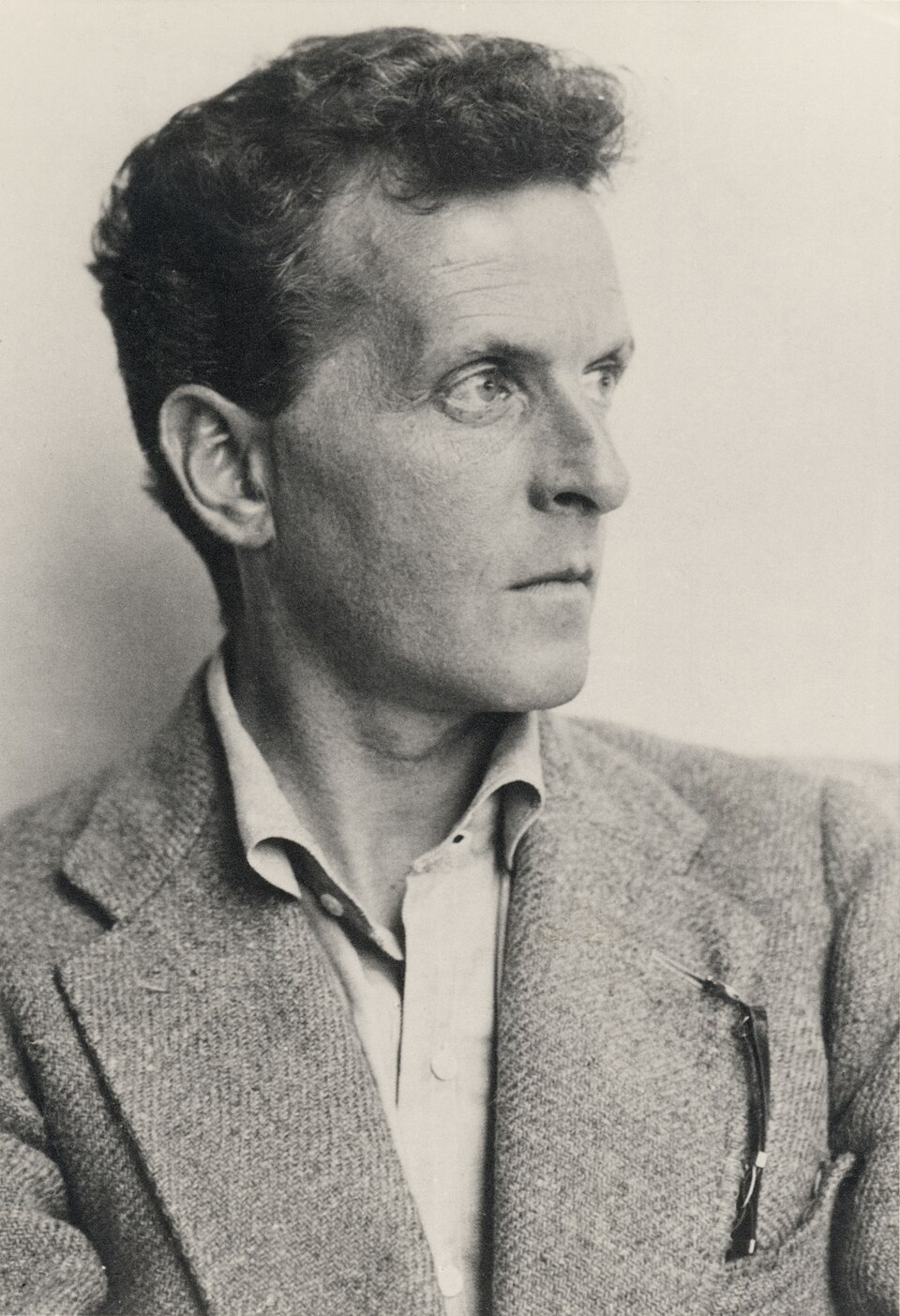
Ludwig Josef Johann Wittgenstein (1889–1951) was an Austrian-British philosopher and is considered one of the most important thinkers of the 20th century.
Born in Neuwaldegg near Vienna into a wealthy industrialist family, Wittgenstein initially began studying engineering before turning to logic and philosophy, going on to study under Bertrand Russell in Cambridge. After serving in the First World War, he published his first major work in 1921/22, the Tractatus Logico-Philosophicus (originally Logisch-Philosophische Abhandlung). In it, he developed a rigorously logical theory of language and the world, which culminates – unexpectedly – in a turn toward ethics.
After a longer break from philosophy – during which he worked as a primary school teacher in rural Lower Austria and as an architect in Vienna – Wittgenstein returned to Cambridge. In the 1930s and 1940s, he developed what would later become known as the Philosophical Investigations, his second major philosophical work. Marking a clear departure from his earlier views, this later philosophy emphasised the importance of everyday language and the context-dependence of meaning – captured in the concepts of language games and forms of life. His later work left a lasting impact on the philosophy of language, logic, and epistemology.
Wittgenstein led a reclusive life, yet maintained deep friendships and close personal relationships. He spent extended periods in Norway and Ireland, where he devoted himself intensely to his philosophical work. Wittgenstein died in Cambridge in 1951.
Source: Monk, R. (1991). Ludwig Wittgenstein: The Duty of Genius. Vintage
Baumann, X., & Students of the College Preparatory School Kundmanngasse in Vienna (2023). 1919–1920: “To a teacher’s training college to become a teacher.” In R. Schweitzer (Ed.), Ludwig Wittgenstein’s Tractatus Odyssey: The Great War and the Writing of the Tractatus Logico-Philosophicus (pp. 153–167). DoppelHaus Press.
Edmonds, D. (2020). The Murder of Professor Schlick: The Rise and Fall of the Vienna Circle. Princeton University Press.
Edmonds, D., & Eidinow, J. (2001). Wittgenstein’s Poker: The Story of a Ten-Minute Argument Between Two Great Philosophers. Ecco.
Eigner, P. (2023). Die Wittgensteins: Geschichte einer unglaublich reichen Familie. Molden.
Greiner, M. (2018). Margaret Stonborough-Wittgenstein: Grande Dame der Wiener Moderne. Residenz Verlag.
Harcourt, E. (2017). Wittgenstein and psychoanalysis. In H. J. Glock & J. Hyman (Eds.), A Companion to Wittgenstein (pp. 651–666). Wiley.
Janik, A. S., & Veigl, H. (1998). Wittgenstein in Wien: Ein biographischer Streifzug durch die Stadt und ihre Geschichte. Springer.
Johannessen, K. S., Larsen, R., & Åmås, K. O. (Eds.). (1994). Wittgenstein and Norway. Solum.
Leinfellner, E., & Windholz, S. (2005). Ludwig Wittgenstein: Ein Volksschullehrer in Niederösterreich. Sutton.
McGuinness, B. (1988). Wittgenstein: A Life. Young Ludwig 1889–1921. University of California Press.
Monk, R. (1991). Ludwig Wittgenstein: The Duty of Genius. Vintage.
Nedo, M. (2012). Ludwig Wittgenstein: Ein biographisches Album. C. H. Beck.
Pinsent, D. H. (1994). Reise mit Wittgenstein in den Norden: Tagebuchauszüge, Briefe (G. H. von Wright, Ed.). Folio Verlag.
Schmidt, A. (Ed.). (2023). „I think of you constantly with love …“: Briefwechsel Ludwig Wittgenstein – Ben Richards 1946–1951. Haymon Verlag.
Sigmund, K. (2018). Sie nannten sich Der Wiener Kreis: Exaktes Denken am Rand des Untergangs. Springer.
Turnovský, J. (1987). Die Poetik eines Mauervorsprungs. Friedr. Vieweg & Sohn.
Vatne, H. (2016). Ludwig Wittgenstein and the People of Skjolden / Ludwig Wittgenstein og skjoldingane. Selbstverlag / Self-published by Harald Vatne. ISBN 978-82-690659-0-9
Wittgenstein, H. (2015). Familienerinnerungen (I. Somavilla, Ed.). Haymon Verlag.
Wittgenstein, L. (2013). Gesamtbriefwechsel / Complete Correspondence (2nd release). Innsbrucker Electronic Edition. InteLex.
Wittgenstein, L. (1969). Notebooks 1914–1916 (G. H. von Wright & G. E. M. Anscombe, Eds.). Harper & Row. Digital reproduction by The Ludwig Wittgenstein Project, retrieved 18 April 2025, from www.wittgensteinproject.org
Wittgenstein, L. (1984). Werkausgabe, Band 1: Tractatus logico-philosophicus / Tagebücher 1914–1916 / Philosophische Untersuchungen. Suhrkamp.
